Jesus’ Deity

For those of us who affirm the deity of Jesus, it can be easy for us to assume that he did not face the same struggles that we face, because, we tell ourselves, he was God. While that is true, Jesus was, and is, God who became man, it does not follow that he didn’t face the same struggles that we face. One of the areas that we can assume that Jesus was different was that he knew the future. For example, he knew that he was going to be handed over to the Romans and killed. He knew Judas would betray him and that Peter would deny him. He knew that he had come to give his life as a ransom for mankind. In many ways, Jesus did know his future, but it also is clear that in other ways Jesus did not know all that would happen to him. As I said before Jesus knew how he was going to die, but there is an aspect of his death that he was not aware of. Through Jesus’ question, “My God, My God, why have you forsaken me?”, Jesus indicates that he was unaware that while he was physically dying, he would also experience being forsaken by his heavenly Father. Jesus had already revealed to his disciples that they would forsake him. However, if he had known that he would have to endure being forsaken by God as well as man and even his friends, there would have been no need of him asking that question. His question addressed to God indicates that he was unaware of what he was currently experiencing. This unawareness on Jesus’ part reveals that he is an even greater role model for those of us who follow him. Even though he was unaware of aspects of his future, he still trusted God, indicated by his subsequent statement, “Into your hands, I commit my spirit”.

We should never discount Jesus’ ability to understand the struggles, including fear of the future, that we face. The fact that he was divine does not remove the reality that he also had to trust God. He was not aware of everything that would happen to him. Jesus’ example on the cross refutes the error that Jesus doesn’t completely understand our struggles because he was God. Rather, we can draw encouragement and strength from Jesus’ example, because he too, experienced times when he didn’t understand, but still chose to trust God.

Being Strong In Difficulty

While Judas was being deceived and doing what Jesus had revealed he was about to do, Peter and all the disciples didn’t realize their own weakness and fears. As he had done with Judas when he revealed he knew about his betrayal, Jesus warned Peter of his coming denial. As Judas went out willingly and betrayed Jesus, Peter denied that he would ever deny Jesus. As we would see later, Peter’s problem was not his love for Jesus, because he would later affirm his love for Jesus. Rather, Peter’s problem was his own fear and weakness coming on the heels of fatigue and shock. We all can be strong when we are with our own support group, but when our support is withdrawn and we are tired and possibly fearful then we run the risk of falling. This is what happened to Peter; he didn’t realize how weak he could be when he was tired, afraid and disillusioned. When he was with Jesus and the other disciples, Peter could not fathom denying Jesus and he was probably right. Peter would never have denied Jesus if he had been surround by Jesus and the other disciples. However, Peter was to become isolated and then challenged.

Peter’s example is illustrative to us as well. The famous football coach Vince Lombardi told his players that fatigue makes cowards of us all. Because of that reality, he made sure his players were in the best physical condition as possible so that in the fourth quarter when they were behind and tired they would not give up. We should not assume that just because we are strong when things are going well that we will be equally strong when things are not going well. Rather we should use the time we have to strengthen ourselves in our relationship with Jesus by following Jesus’ instruction to pray so that we will not fall into temptation, so that when we face difficulty we will not falter.

The Influence of Fathers

In his final pronouncement against the religious leaders, scribes and Pharisees, Jesus revealed an insightful truth about identity. The leaders attempted to disassociate themselves with what their forefathers had done, but Jesus declared that they testified against themselves, because they still identified themselves as the sons of those who murdered the prophets and the righteous. Jesus declared that rather than disassociating themselves, they identified with them and committed even greater sins, by persecuting Jesus, the Son of God. These religious leaders demonstrate that we tend to continue to identify ourselves according to the flesh, with our biological parents, which then tends to connect us with their sin and failures. Even though Jesus was born of Mary and raised by Joseph, he always identified himself with his heavenly Father, rather than his earthly parents. This does not mean that he didn’t honor and care deeply for Mary and Joseph; he demonstrated his care for Mary, while entrusting her to the care of John as he life ebbed away.

Consider both Jesus’ example and his instruction to us. As a boy, when Mary referred to Joseph as “his father”, Jesus responded that he needed to be in His Father’s house, the temple. Later when Mary and his brothers came to him, he declared that his mothers and brothers were all those who did the will of his Father in Heaven. Finally, Jesus instructed us not to call anyone on earth, Rabbi, Father or Teacher, because those roles are filled by Jesus and God our Father. Why is this important? As Jesus demonstrated with the religious leaders of his day, how we identify ourselves, whose sons and daughters we consider ourselves to be, will impact our present behavior and our future. The more that we identify with our human fathers and mothers will lead us to following their behavior. The more that we identify ourselves with our heavenly Father and Jesus the more our present behavior and future will reflect them and disassociate ourselves with the sins of our fathers. In other words, Jesus’ example and teaching instructs us to honor our biological fathers and mothers, while at the same time identifying with Jesus and our heavenly Father.

Considering Our Future

Jesus showed that he not only answered the question posed to him, but the assumption behind the question. When the Sadducees came inquiring about marriage in the resurrection from the dead, Jesus clarified their question by addressing their misunderstanding. They assumed that the marriage on earth would carry over in some form after the resurrection, but Jesus clarified that it won’t. Paul also addressed this in Romans 7, when he declared that the marriage covenant is ended at the time of the death of one of the spouses. This is how a widow(er) can remarry afterwards, without being an adulterer. Jesus compared those in the resurrection to angels, who neither marry nor are given in marriage. The Sadducees tried to interpret the resurrection through the lens of their earthly existence. Jesus revealed to them that they had erred in their reasoning.

It is interesting how often people in our culture assume that earthly relationships will continue after death. Yet Jesus indicates that those familial relationships will be transformed. Yet, for us to not have some emotional connection with our spouse or grief over not being married any longer, some significant changes will need to take place in our life and memories, because our memories do arouse our emotions. On earth spouses become one flesh and man is instructed not to separate what God has joined together, yet in the resurrection, they will be separate. How will that take place?

From observing Jesus after his resurrection it is clear we will experience life at a higher level than we do now on earth. Our understanding will be greater. From glimpses of Jesus’ life after his resurrection, we can see that we will interact with the physical world differently. Jesus appeared and disappeared to his disciples on various occasions. If these changes were true with Jesus, then it is reasonable to speculate that our emotional make-up and relationships will also be raised to a higher level. So that the memories of our existence on earth will have a different emotional impact on us than they do now.

Jesus’ instruction on life in the resurrection indicates that our existence at that time will be significantly different from how we experience life now. That knowledge should and must influence how we live now, with an understanding that there is always opportunity for growth now, because our anticipation of our future impacts how we live in the present. What we need to remember is that our future extends eternally past life as we know it on earth. That future as well should impact how we live today. Jesus reminds us that the life that we now live is not perpetual, but will end one day and be transformed into a very different life for us.

Why Didn’t The Leaders Repent?

Over and over Jesus addressed the religious leaders of his day, revealing to them what was in their hearts. Ironically they did not deny what Jesus said. After Jesus told them the parable of the tenant farmers, who killed the owner’s servants and murdered his son, the heir, the leaders knew that Jesus was speaking of them. They knew what was in their hearts, so they recognized themselves in the tenant farmers, yet they did not repent, rather they hated Jesus for exposing them. The question is why didn’t they repent? Many in the crowds did repent and followed Jesus, but few of the leaders did. Jesus said that it was difficult and even impossible for man (but not with God) for the wealthy to enter into the Kingdom of God. The religious leaders’ attitude toward Jesus confirms what Jesus had earlier said. But the question of why remains.

The allure of wealth and the praise of men is intoxicating and blinds us from the importance of following the truth, truth being Jesus. Jesus said he was the way, the truth and the life, no man comes to the Father except through him. Wealth and man’s praise becomes like a drug to the extent that those caught in its power will do almost anything to maintain it, sacrificing future benefits in order to maintain short-term comfort and pleasure. In this case, the religious leaders were willing to murder Jesus in order to maintain their position of wealth and authority for a season.

For those of us living in the affluent west, we must continually examine our hearts to make sure our desire to maintain comfort and status is not deceiving us from that which is true, right and good.

Jesus’ Mission

Jesus knew his authority and he used it for the benefit of others, not for himself nor to prove himself. Satan tempted him to benefit himself and to prove himself, but Jesus refused to do so then and continued to refuse to benefit from his own position. He had come to give his life as a ransom for many. While alive he blessed others with renewed health from disease and freedom from demons, but when he died he accomplished what men didn’t ask him for, a restored relationship with God, his Father. On one occasion, two blind men sitting on the road out of Jericho, cried out to Jesus for mercy. Jesus asked what they wanted. All they asked for was to have their eyes opened. However, they needed so much more and didn’t even know to ask. Then Jesus touched their eyes, they saw and followed Jesus. They could have gone their own way, but they didn’t. They followed Jesus. Their eyes were opened, but in that moment when they saw Jesus, they knew he was the one they had to follow.

All of us are like those two blind men sitting by the side of the road. We may think we know what we need and we pray to have that need fulfilled, but truly we need so much more. When Jesus died, he opened the way back to the position that we were created to fulfill. He opened the road to a restored relationship with God our creator and our Father, however just having the road open, is not enough. We must actively walk down that road. In order to have our eyes opened and to receive what we need, even those needs that we are ignorant of, means we must intentionally walk down that road and learn to live with Jesus. This is more than going to church and practicing spiritual disciplines. It involves at the very least allowing the Spirit of God to transform us into our version of Jesus. It involves doing things we never thought we would do and going places we never thought we would go. Through our response and involvement we allow the Holy Spirit to transform us and renew our minds. This process is not something we can accomplish on our own through our own efforts; it is a divine partnership. We do what Jesus sets before us to do and His Spirit does the changing in us as we cooperate with him. The amazing thing is that there is always more transformation that needs to take place on our journey with Jesus. There are always more corrections that Jesus’ Spirit reveals to us.

Jesus’ Death

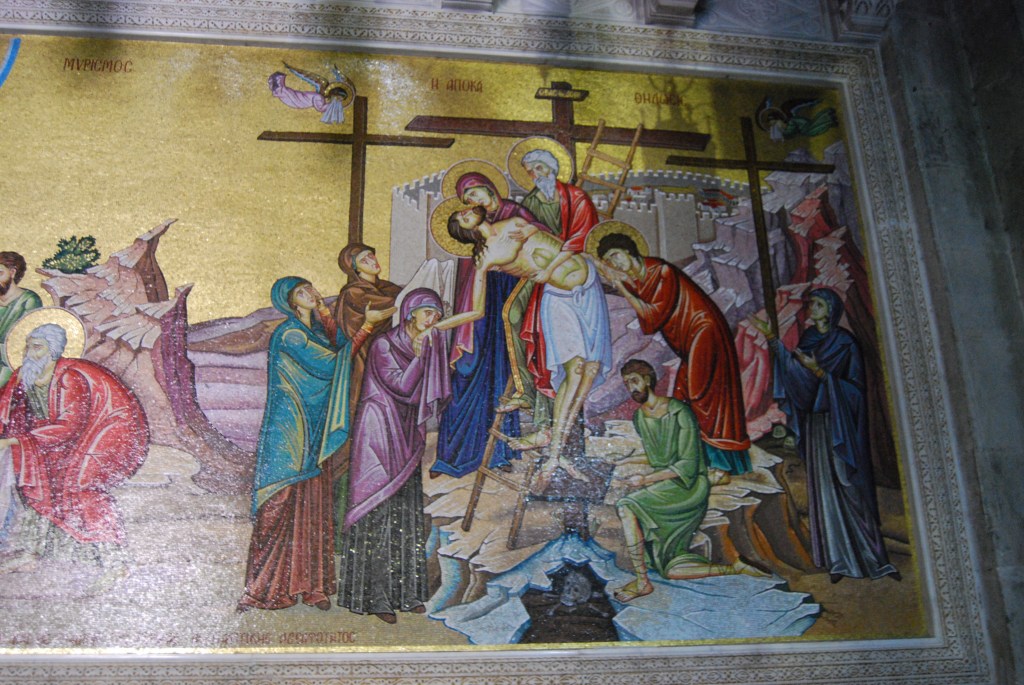
Matthew 20:28 reveals Jesus’ primary purpose for coming. He came to give his life as a ransom for many. The word “lutron” in Greek refers to the price paid to release a slave. The ransom was paid to fulfill the requirements of the Old Testament law. That means Jesus’ death was not paid to the Father to satisfy his wrath, as some have concluded. While Paul does refer to the wrath of God being expressed in Romans 1, it is important to recognize at what his wrath is being directed. Jesus constantly portrayed God as our loving father, who is kind and compassionate toward his children. So what is God angry at? He is angry at evil in the world that both mis-portrays God himself and deceives his children from the truth. Some have used “God’s wrath” to convince individuals to repent, however that method often leads to individuals being terrified of God, rather than living in the freedom of his love. There is also the question of why Jesus declared that God had forsaken him while he was on the cross. I believe the best way to understand this is not that Jesus was experiencing all of God’s wrath that had been stored up for mankind, but that Jesus referred to the natural consequence of a broken relationship due to man’s disobedience of God’s commands. I don’t believe Jesus felt God’s wrath on the cross, rather he felt his distance, which broke Jesus’ heart.

I’ve also heard some say that the ransom that Jesus referred to in Matthew 20:28 was paid to Satan as if he had kidnapped the human race. However, we find no evidence in Scripture for this explanation. Satan often deceives mankind, as he tried to deceive Jesus during Jesus’ temptation. However, this does not mean that Satan is the legitimate master of mankind, even though he may deceive men and women into thinking that he is.

Earlier Jesus had said he had come to fulfill the law, not to abolish it. Here Jesus tells us how he would fulfill the law. His death would fulfill the law’s requirements regarding judgment of mankind’s sin, which is why the veil in the temple was torn from top to bottom at Jesus’ death. What was keeping men out of a close relationship with God had been removed. Jesus set us free to engage in and experience a father and child relationship with God.

Kingdom Recognition

In the parable of the workers, the master hired workers throughout the day, but only with the first did he agree on a wage, a denarius. With the rest, he just told them he would pay them, but didn’t specify an amount. At the end of the day, he began paying the workers, beginning with those hired last and gave them a denarius as well. Those hired first felt cheated because they didn’t get more. However, the master reminded them that they had agreed to work for a denarius, so why should they be upset because he decided to be generous with those who were hired later in the day?

Here Jesus addressed our tendency to compare ourselves with one another, rather than accepting what we have been given. I believe this parable reveals the heart of God toward all. A denarius was considered a day’s wages. A worker would take his wage home and feed his family with what he earned that day. Many workers literally lived hand to mouth; they immediately spent what they earned that day to survive the day. Those who worked the entire day and received a denarius got the normal rate, but those who worked part of the day received a gift; they got more, because they only worked part of a day. Many of us when we read Jesus’ parable of the workers identify with those who were hired in the morning, because we view our work as providing a living for ourselves. However, since Jesus is describing the Kingdom of Heaven, we should identify with those hired throughout the day and receive a gift at the end of the day. None of us deserve the Kingdom of Heaven, we receive it as a gift. Even those who walk with Jesus their entire lives or most of their lives deserve nothing more than those who acknowledge Jesus at the end of their life.

Jesus shows us that in the Kingdom of Heaven the first are last and the last are first, because there is no hierarchy in the Kingdom of Heaven. We are all brothers and sisters. In the world we have to earn much of what we receive, or at least we think we do. Some are in authority over others and receive more because of the concept that more responsibility should receive a greater compensation. However, in the Kingdom of Heaven there is no need for that model, because the Kingdom of Heaven is similar to children in a family where all have their needs met, not based on effort and accomplishment, but on relationship. In the Kingdom of Heaven compensation is not the motivating factor to our efforts, love is.

Divine Compassion

Following Jesus is much more than external behavior. Jesus made this point in his parable of the unmerciful servant. That parable was prompted by Peter’s question regarding how many times he should forgive his brother. Peter assumed up to seven times, Jesus corrected him with the instruction to forgive seventy times seven times. Jesus then described the Kingdom of Heaven as a Master who decided to settle accounts with his servants. One servant owed his master 10,000 talents, an unimaginable and unpayable sum. As his Master was about to hand him over to debtors’ prison, the servant pled with him to give him time to repay, at which the Master had compassion on the servant and forgave the debt. He forgave the debt, which meant the servant didn’t have to ever pay back what he owed. But immediately the servant went out and found another servant who owed him a rather small sum, one hundred denarii. Like he had done before his Master, his co-servant begged him to give him time to repay, but without compassion he threw his co-servant into prison until he repaid his debt. The other servants, seeing this injustice, went to their Master and explained what had happened. When he confronted his servant about what he had done to his co-servant, the Master reminded him of how he had forgiven him that great sum and declared that he should have done the same toward his co-servant. Since he had not, the Master cast the servant also into prison. Jesus concluded that this is what would happen to those who claim to follow Jesus but refuse to forgive their brothers from the heart.

Jesus’ conclusion is more than just an action, but expects his followers to feel compassion toward those who have hurt them and forgive them. The motivation for this behavior is how God our heavenly Father feels toward us who are in greater debt to Him than anyone is toward us. The compassion that we feel toward those who hurt us, is grounded in the gratitude that we have for how much we have been forgiven. When we fail to experience that compassion, it indicates that we have not recognized how much we’ve been forgiven and therefore are not grateful toward God or compassionate toward our brothers who hurt us. That compassion we are to feel toward those who hurt us does not come naturally to us, but comes from our heavenly Father though Jesus’ Spirit who dwells with us. That divine compassion we feel toward those who hurt us is yet another sign that we are children of God. Of course we also have a choice to tap into that divine compassion and forgive, or to ignore it and remain in hurt and anger toward that person. The choice is ours.

Following Jesus is much more than the development of certain disciplines and habits, but involves allowing him to address the issues of our heart, then living out the implications of what Jesus has done in our hearts.

Living Right Side Up

We live in an upside down world that exists in contrast to how Jesus revealed his Kingdom to be and the world should be. When his disciples asked who was the greatest in Jesus’ Kingdom, Jesus gave them a surprising answer. He called a child to stand in their midst and declared that unless, they, the disciples, were converted or changed to become like children they would never enter his Kingdom. While Jesus’ words are shocking today, they would have been outright unbelievable in the first century. The ancient world had little or no value for children. Some religions even sacrificed them. The Romans often abandoned baby girls. Children were often seen as an economic drain on the family, not as blessings from God as Scripture declares. Only after, and because of Jesus, were children valued. Christians rescued baby girls abandoned by their Roman families and raised them as their own daughters. In subsequent centuries Christians and churches established orphanages to care for abandoned and unwanted children, who otherwise would have been left to fend for themselves. Years later, Christians like D. L. Moody established schools on Sunday to teach children to read and write. Just in declaring value for children Jesus transformed multiple cultures in ways we take for granted today.

However, what did Jesus mean by becoming like children? Jesus instructed his disciples that they were to humble themselves like a child. This is where Jesus’ kingdom instructs our upside down world. Children are actually the model for a citizen of his Kingdom. In what way? Children recognize their dependence upon their parents. They are valued and loved by their parents just for who they are, not for what they can produce. They are a picture of the model kingdom citizen, humble, joyful and confident that all their needs will be cared for. They stand in stark contrast with those who Jesus said will come to him on the day of judgment declaring they are part of his Kingdom because they prophesied, healed the sick and cast out demons in Jesus’ name, prompting Jesus to say that he never knew them. This does not mean that Jesus is indicating that we are to be idle. Observe young children, they are active and busy, learning and practicing new skills, soaking up what their parents show them and delighting in each new ability acquired.

Our journey with Jesus is revealed to be one of relationship and discovery as Jesus reveals to us how to live right side up and not upside down. Then, as we learn to live right side up, we become examples for others to follow Jesus themselves. As children we are to delight in our learning to be like him, refusing to assume that our “productivity” gives us any standing in Jesus’ Kingdom.